
I receive regular posts from the Henle Verlag publishing house about their new Urtext editions.
This time their editorial is about how infrequently female composers are programmed and the reasons for that. In particular, their latest edition features the Sonata for Violoncello and Piano by Dutch composer and pianist Henriette Bosmans (1895–1952).
Here's a bit of blurb about this composer from the Henle website:
Concert halls, in which no music by female composers is heard, are no longer imaginable, though still not a given, for inertia forces in classical music are not to be underestimated. Many believe that music history has miraculously and automatically made, unbiased, a purely qualitative selection in terms of what dominates concert programmes worldwide. Bach, Haydn, Mozart, Beethoven, Schubert, Schumann, Brahms – they were simply the best, and if no woman has managed to produce similarly great art, that fact cannot be altered. In comparison, a different insight is finally gaining ground: If music by female composers has often fallen below the so-called threshold of perception, this situation says nothing about the music itself, but only the more about the (often male) designers of this so-called perception threshold.
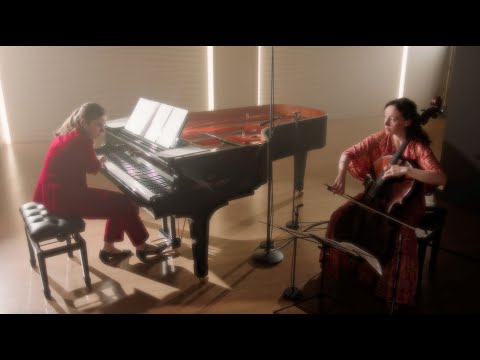
How about an example? The Sonata for Violoncello and Piano by Dutch composer and pianist Henriette Bosmans (1895–1952), is now being published for the first time as an Urtext edition, hot off the press, by our Henle publishing house: HN 1667. This sonata is a musical force of nature, a lyrical work of magic, a virtuoso challenge for the solo part, an opulent display of full-fisted piano writing, a masterpiece straddling the border between late romanticism and modernism – and yet it has remained largely unknown until now. Bosmans was only 23 years old when she wrote this cello sonata in 1919, performed it with the Belgian cellist Marix Loevensohn, then principal cellist of the Concertgebouw Orchestra, and published it with the Broekmans & Van Poppel publishing house.
Well, all fair and good. But the proof is in the pudding. Here's a YouTube video of the sonata in question. Have a listen and maybe we can talk about it?
And here's the link to the full Henle Verlag article: https://blog.henle.de/en/2025/10/13/...reasure-trove/
This time their editorial is about how infrequently female composers are programmed and the reasons for that. In particular, their latest edition features the Sonata for Violoncello and Piano by Dutch composer and pianist Henriette Bosmans (1895–1952).
Here's a bit of blurb about this composer from the Henle website:
Concert halls, in which no music by female composers is heard, are no longer imaginable, though still not a given, for inertia forces in classical music are not to be underestimated. Many believe that music history has miraculously and automatically made, unbiased, a purely qualitative selection in terms of what dominates concert programmes worldwide. Bach, Haydn, Mozart, Beethoven, Schubert, Schumann, Brahms – they were simply the best, and if no woman has managed to produce similarly great art, that fact cannot be altered. In comparison, a different insight is finally gaining ground: If music by female composers has often fallen below the so-called threshold of perception, this situation says nothing about the music itself, but only the more about the (often male) designers of this so-called perception threshold.
How about an example? The Sonata for Violoncello and Piano by Dutch composer and pianist Henriette Bosmans (1895–1952), is now being published for the first time as an Urtext edition, hot off the press, by our Henle publishing house: HN 1667. This sonata is a musical force of nature, a lyrical work of magic, a virtuoso challenge for the solo part, an opulent display of full-fisted piano writing, a masterpiece straddling the border between late romanticism and modernism – and yet it has remained largely unknown until now. Bosmans was only 23 years old when she wrote this cello sonata in 1919, performed it with the Belgian cellist Marix Loevensohn, then principal cellist of the Concertgebouw Orchestra, and published it with the Broekmans & Van Poppel publishing house.
Well, all fair and good. But the proof is in the pudding. Here's a YouTube video of the sonata in question. Have a listen and maybe we can talk about it?
And here's the link to the full Henle Verlag article: https://blog.henle.de/en/2025/10/13/...reasure-trove/
Comment